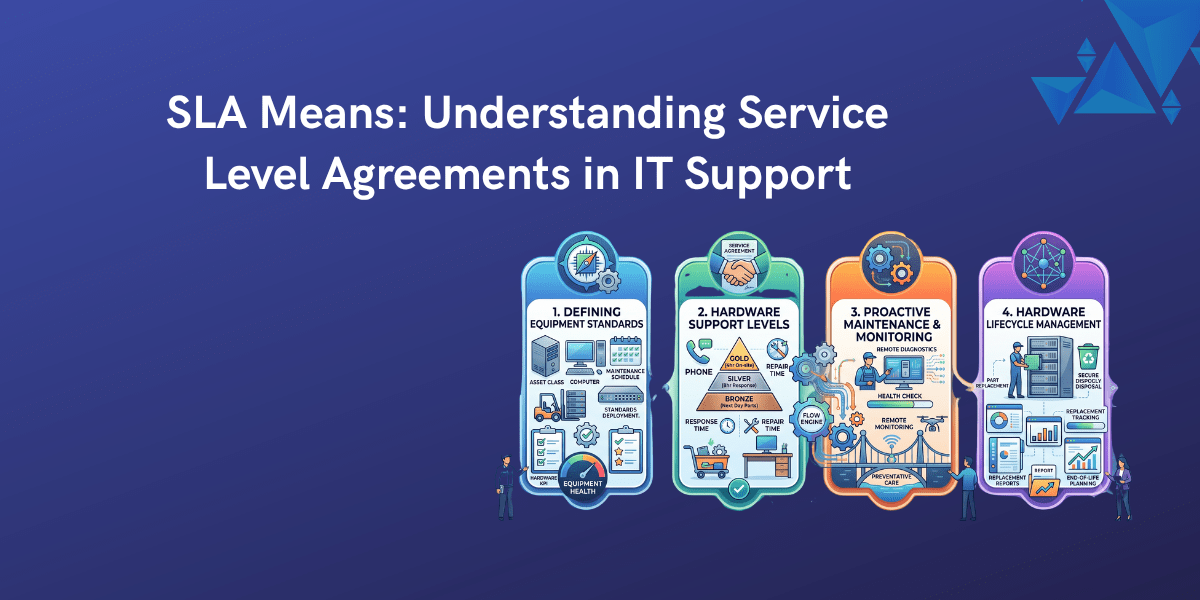
What Does SLA Means in IT Support? SLA Means Service Level Agreement. It is a written agreement between a service provider and a customer. This agreement explains the level of service the customer will receive. It includes response times, issue resolution times, support hours, and other service details.
When a business depends on its IT systems every day, unexpected problems can affect work, customer service, and productivity. A Service Level Agreement helps both the customer and the service provider understand their responsibilities. It also gives businesses confidence that their IT support needs will be handled within the agreed time.
If you are planning to work with an IT support company or a third-party maintenance provider, understanding SLA Means is an important first step.
Why Is an SLA Important?
Every business wants reliable IT support. Whether you use servers, storage systems, networking devices, or tape libraries, problems can happen at any time. An SLA clearly explains what you can expect when those problems occur.
Without a Service Level Agreement, there may be confusion about response times or the type of support included. An SLA helps avoid misunderstandings by putting everything in writing.
Some of the main benefits include and also explain what exactly SLA Means:
- Clear response and resolution times
- Better communication between both parties
- Fewer service-related misunderstandings
- Better planning for IT maintenance
- More confidence in the support service
What Is Included in a Service Level Agreement?
Although every company may have different terms, most SLAs include the following information.
Response Time
This tells you how quickly the support team will respond after you report an issue. Critical problems usually receive faster attention than minor issues.
Resolution Time
This explains the expected time required to fix the reported problem. Some issues may be resolved within hours, while others may require additional work.
Support Hours
The agreement states when support is available. Some businesses need support only during office hours, while others require 24/7 coverage.
Services Covered
An SLA lists the equipment and services included in the agreement. This may include server maintenance, storage support, network maintenance, or hardware replacement.
Customer Responsibilities
The agreement also explains what the customer should do, such as reporting issues correctly, allowing access to equipment, or providing the required information.
How Does an SLA Help Businesses?
Every minute of downtime can affect daily business operations. Employees may not be able to access important systems, customers may face delays, and business activities can slow down.
A well-written SLA helps businesses by providing a clear support process. When an issue is reported, the service provider follows the agreed response and resolution times. This helps basically reduce uncertainty and gives businesses a better understanding of what to expect.
For companies with data centers or large IT environments, an SLA also helps with planning maintenance activities and managing business operations more effectively.
SLA Means More Than Just Response Time
Some people think that an SLA only tells them how quickly support will respond. In reality, it covers much more than that.
A Service Level Agreement also explains:
- The level of technical support available
- How service requests are handled
- Priority levels for different types of issues
- Communication methods during incidents
- Maintenance schedules
- Performance expectations
This makes the agreement useful for both the customer and the service provider.
SLA in Third-Party Maintenance
Businesses often choose Third-Party Maintenance (TPM) after their hardware reaches End of Life (EOL) or End of Service Life (EOSL). A reliable TPM provider supports servers, storage systems, networking equipment, and tape libraries without requiring expensive manufacturer support.
In Third-Party Maintenance, the SLA becomes even more important. It explains how quickly engineers will respond, what equipment is covered, replacement part availability, and the level of technical support provided.
Before signing any maintenance contract, businesses should carefully review the Service Level Agreement and confirm that it matches their operational requirements.
Questions to Ask Before Signing an SLA
Before choosing an IT support provider, must ask these questions:
- What is the guaranteed response time?
- How long does issue resolution usually take?
- Is support available after business hours?
- Which devices are included in the agreement?
- Are replacement parts included?
- How are emergency issues handled?
- What happens if service targets are not met?
These questions can help you choose a support provider that matches your business needs.
Choosing the Right IT Support Partner - Agrius IT
Choosing the right IT support partner is an important decision for any business. A trusted provider should offer clear Service Level Agreements (SLAs) without hidden terms, so you know exactly what services are included and what level of support you can expect.
When selecting an IT support provider, look for:
- Flexible SLA options for better understanding
- Multi-vendor hardware support
- Experienced technical engineers
- Fast response times
- Clear communication for customers
- Reliable maintenance services
Agrius IT provides Third-Party Maintenance (TPM) services for servers, storage systems, networking devices, and tape libraries. With flexible SLAs(service level agreements), skilled engineers, and multi-vendor support, we help businesses keep their IT infrastructure running smoothly while reducing maintenance costs.
Read More: Learn how Agrius IT can support your business with reliable TPM (Third-Party Maintenance) services and flexible Service Level Agreements designed to meet your IT requirements. Contact Agrius IT today to discuss your IT support needs and find the right SLA for your business.