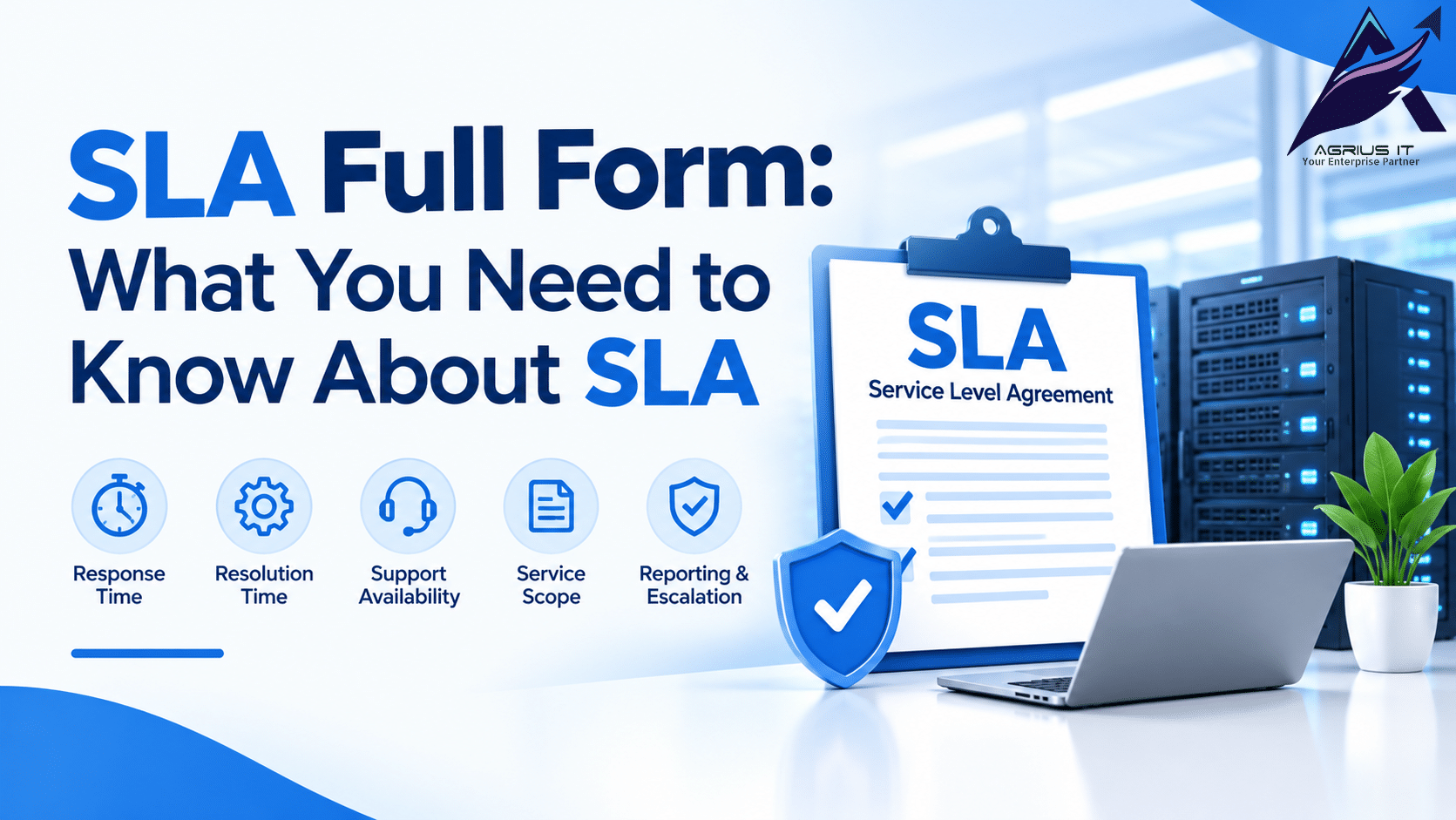
The SLA full form is Service Level Agreement. It is an agreement between a service provider and a customer that explains the level of service the provider will deliver. It includes details such as response time, support availability, service quality, and responsibilities. In IT maintenance, an SLA helps businesses understand what support they can expect when their servers, storage systems, or network equipment need attention.
For businesses that depend on IT infrastructure, an SLA helps set clear expectations between the customer and the service provider. It also provides a way to measure whether the agreed service standards are being met.
SLA Full Form:Service Level Agreement (SLA)?
A Service Level Agreement is a formal agreement that defines the services a provider will deliver to a customer. It describes the expected service standards and explains what each party is responsible for.
For example, a company may need technical support for its servers and network equipment. Its SLA may state that the support team will respond to an essential issue within a specific time period. The SLA agreement can also explain the support hours, and reposting requirements.
SLAs are commonly used in IT support, Managed IT services, data centers, and third-party maintenance (TPM). They help businesses understand the scope of support before entering into a service contract.
Why Is an SLA Important in IT Maintenance?
An SLA is important because businesses need reliable IT systems to carry out their daily operations. A server or network failure can affect employees, applications, and customer services. Without clear service terms, customers may not know when to expect a response or how an issue will be handled.
Here are some key benefits of an SLA:
- Clear expectations: It explains the services included in the agreement and the support customers can expect.
- Defined response times: It sets target times for responding to exact issues.
- Better accountability: It helps everyone understand their responsibilities.
- Service monitoring: It provides measurable standards for reviewing service performance.
- Clear communication: It outlines how customers can report problems and how the provider will share updates.
A service level agreement helps businesses choose IT maintenance services that match their operational needs.
What Are the Key Components of an SLA?
Need to understand SLA full form may include several important terms, depending on the service and the customer’s requirements.
1. Response Time
Response time is the period between reporting an issue and receiving an initial response from the support team. For example, an SLA may set a target response time of one hour for a critical incident.
2. Resolution Time
Resolution time refers to the time required to fix an issue. It is different from response time because responding to a problem does not mean it has already been resolved. Resolution targets may depend on the issue, its complexity, and the availability of replacement parts.
3. Support Availability
This section explains when technical support is available. Some businesses need support during regular working hours, while others require 24/7 assistance because their IT systems operate around the clock.
4. Service Scope
The service scope lists the equipment and services covered by the agreement. In IT maintenance, this may include servers, storage systems, network devices, and other infrastructure.
5. Reporting and Escalation
An SLA may explain how service performance is reported and how an issue is escalated when it needs additional attention. This helps customers understand how problems will be managed.
How Does an SLA Support Third-Party Maintenance?
Third-party maintenance (TPM) allows businesses to receive hardware support from a provider other than the original equipment manufacturer (OEM). It can be a useful option for companies that want to continue using their existing IT equipment after the manufacturer’s support ends.
An SLA helps define the support customers can expect from a TPM provider. It may cover response targets, technical assistance, and the handling of hardware faults.
Agrius IT provides third-party maintenance for servers, storage systems, and network equipment, including hardware that has reached End of Life (EOL) or End of Service Life (EOSL). Its SLA-based support helps businesses understand the agreed service terms and plan their IT maintenance requirements.
Before choosing a provider, businesses should check the equipment covered, support hours, response targets, parts availability, and any exclusions in the agreement.
Conclusion
Understanding the SLA full form, Service Level Agreement, helps businesses make better decisions when choosing IT support and maintenance services. An SLA defines service expectations, response targets, responsibilities, and other important terms.
For businesses that depend on servers, storage, and network equipment, a clear SLA can help set expectations and improve communication with their maintenance provider. Before signing an agreement, review its terms carefully and confirm that the services meet your business requirements.
Agrius IT offers third-party maintenance for businesses that need ongoing support for their IT infrastructure. Visit AgriusIT.com to learn more about its services. Contact Us to discuss your IT maintenance requirements.