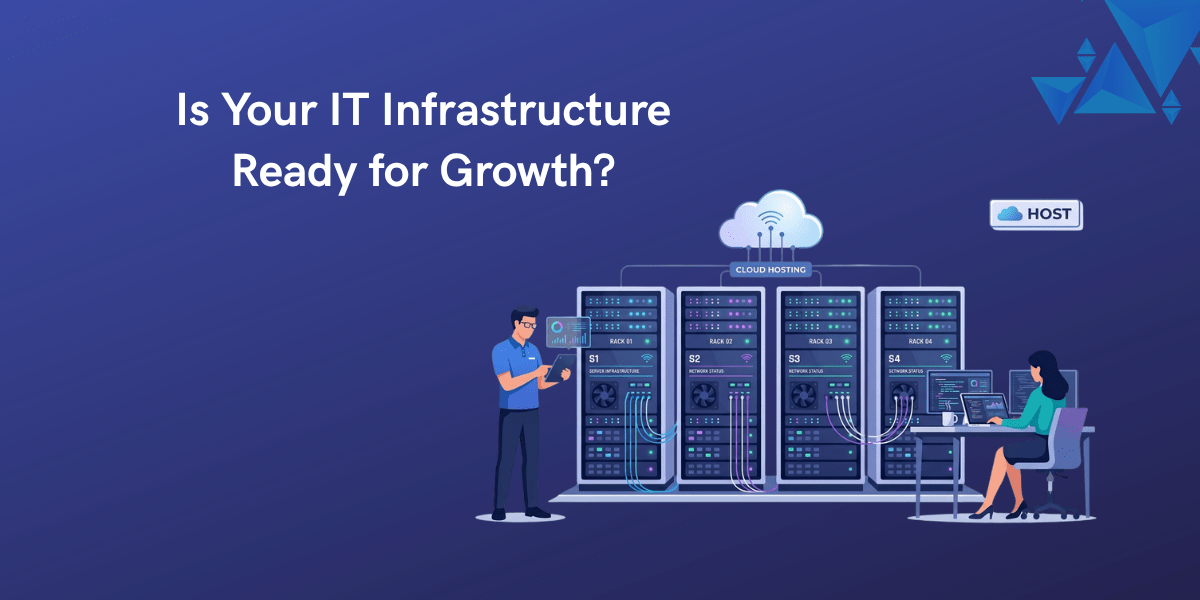
Every business wants to grow, but is your IT infrastructure ready to support that growth? As your company expands, your servers, storage systems, network devices, and other IT equipment handle more users, more data, and more daily tasks. If your IT infrastructure cannot keep up, your business may experience slow performance, unexpected downtime, and higher operating costs.
A well-managed IT infrastructure helps businesses run smoothly and support employees without interruptions. Whether you are a small business or a large enterprise, keeping your IT environment in good condition is an important part of long-term success.
IT Infrastructure: The Backbone of Business Operations
IT infrastructure is the combination of hardware, software, networks, storage systems, and related services that keep a business running. It includes everything needed to support daily operations, such as:
- Servers
- Storage systems
- Network switches and routers
- Tape libraries
These components work together to support communication, business applications, file storage, and customer services.
Why Does IT Infrastructure Matter?
Business growth brings new opportunities, but it also increases the demand on your IT systems. More employees, more customers, and more business applications require reliable hardware and network performance.
When your IT infrastructure is well maintained, your business can:
- Reduce unexpected downtime
- Improve employee productivity
- Support business applications efficiently
- Protect valuable business data
- Reduce maintenance costs
- Keep daily operations running without interruptions
A reliable IT infrastructure gives businesses the confidence to focus on serving customers instead of dealing with hardware failures.
Signs Your IT Infrastructure Needs Attention
Many businesses continue using aging equipment until problems become difficult to ignore. Waiting too long can lead to costly disruptions.
Some common warning signs include:
Slow System Performance
Applications take longer to load, files open slowly, and employees spend extra time waiting for systems to respond.
Frequent Hardware Failures
If servers, storage devices, or networking equipment require constant repairs, it may be time to review your maintenance strategy.
Increasing Downtime
Unexpected outages affect productivity and customer satisfaction. Even short periods of downtime can impact business operations.
High Maintenance Costs
When repair costs continue to increase every year, businesses should consider whether their current support plan still meets their needs.
Limited Storage Capacity
As business data grows, storage systems may become full, making it difficult to manage new information efficiently.
Key Parts of a Reliable IT Infrastructure
A strong IT environment depends on several important components working together.
Server Infrastructure
Servers run business applications easily, store important files, and support employees every day. Regular maintenance helps reduce failures and extends server life.
Storage Systems
Business information grows every year. Reliable storage systems keep files organized, available, and protected from data loss.
Network Infrastructure
A stable network allows employees, customers, and business applications to communicate efficiently. Proper maintenance of switches, routers, and other networking equipment helps reduce connection issues.
Data Backup
Backups protect valuable business information from hardware failures, accidental deletion, or unexpected incidents. Regular backup testing is equally important.
How Regular Maintenance Supports Business Growth
Many companies only react when equipment fails. Preventive maintenance helps identify small issues before they become major problems.
Regular maintenance includes:
- Hardware inspections
- Software updates
- Performance monitoring
- Storage health checks
- Network testing
- Backup verification
These activities help reduce downtime and keep business operations running smoothly.
Don't Replace Every Device Too Soon
Many businesses assume that older hardware must always be replaced. In many cases, this is not necessary.
Equipment that has reached End of Life (EOL) or End of Support Life (EOSL) may still perform well with the right maintenance services. Businesses can continue using reliable hardware while reducing unnecessary replacement costs.
This approach allows companies to manage IT budgets more effectively while continuing normal operations.
The Importance of Third-Party Maintenance
Many organizations choose third-party maintenance services to continue supporting their existing IT equipment after manufacturer support ends.
Third-party maintenance offers several advantages:
- Lower maintenance costs
- Support for multiple hardware brands
- Flexible service agreements
- Longer hardware life
- Reduced equipment replacement expenses
This allows businesses to focus their budget on projects that directly support business growth instead of replacing equipment that still performs well.
Questions Every Business Should Ask
Before planning business expansion, consider these questions:
- Can your servers support additional users?
- Is your storage capacity enough for growing business data?
- Are your network devices performing efficiently?
- Do you have reliable backup systems?
- How quickly can hardware issues be resolved?
- Are maintenance costs increasing every year?
- Is your current support plan meeting your business needs?
Answering these questions helps identify areas that may need improvement before they affect business operations.
Building an IT Infrastructure That Supports Growth
Business growth is not only about hiring more employees or serving more customers. Your IT infrastructure must also be ready to support increasing workloads.
A practical approach includes:
- Reviewing existing hardware regularly
- Monitoring system performance
- Scheduling preventive maintenance
- Planning storage growth
- Improving network reliability
- Keeping backup systems updated
- Working with experienced IT support providers
Small improvements made consistently often prevent larger problems later.
Choose the Right IT Support Partner
Managing IT infrastructure requires experience, planning, and ongoing support. Working with a trusted IT maintenance provider allows businesses to reduce downtime, extend hardware life, and keep systems operating efficiently.
A reliable support partner understands your business requirements and provides maintenance services that match your operational needs instead of recommending unnecessary hardware replacements.
Why Choose Agrius IT For IT Infrastructure?
Agrius IT provides professional IT infrastructure support for businesses across different industries. Our services are designed to help organizations keep their IT environment reliable while reducing maintenance costs.
Our services include:
- Third-Party Maintenance (TPM)
- Server Maintenance Services
- Storage Hardware Support
- Managed Network Maintenance
- Tape Library Maintenance
- Multi-Vendor IT Support
- IMAC Services
- Refurbished IT Hardware
- Data Disposal Services
Our experienced team supports multiple hardware brands and helps businesses extend the life of their IT equipment with flexible service options.
Final Thoughts
Business growth depends on more than new opportunities; it also depends on reliable technology. If your servers, storage systems, networks, and other IT equipment are not ready to handle increasing workloads, your business may experience downtime, slower performance, and higher maintenance costs.
Reviewing your IT infrastructure regularly, maintaining existing hardware, and choosing the right support services can help your business continue operating smoothly as it grows.
Agrius IT helps businesses maintain reliable IT infrastructure with cost-effective third-party maintenance, server maintenance, storage hardware support, managed network maintenance, tape library maintenance, and multi-vendor IT support. Contact Agrius IT to discuss how we can help keep your IT infrastructure ready for your business needs.