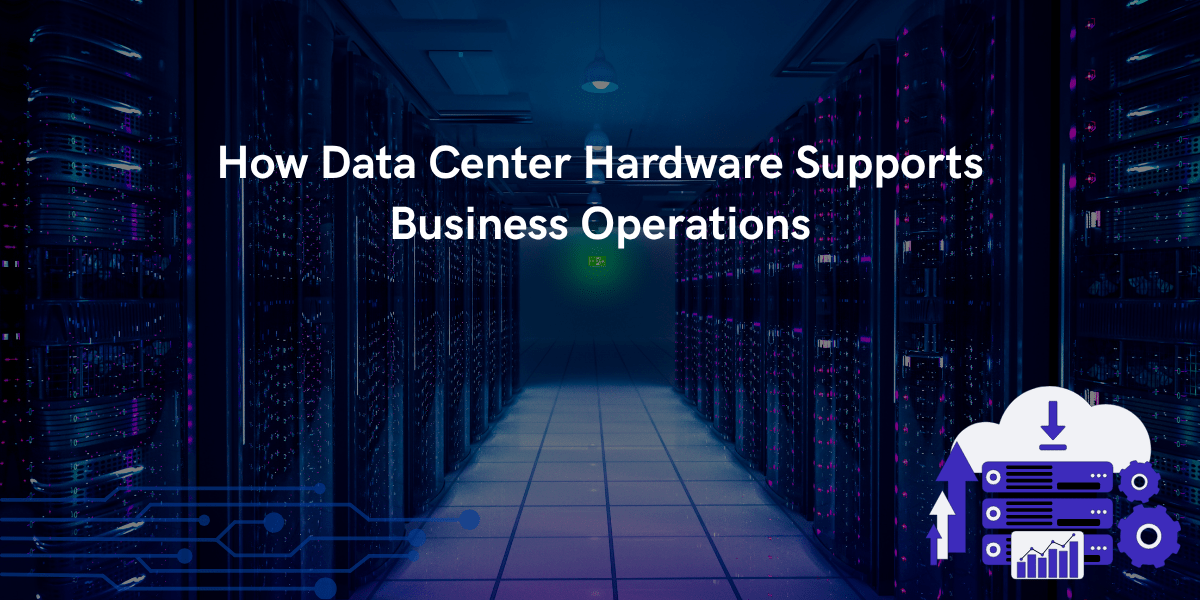
Businesses depend on IT systems to manage daily tasks such as communication, data storage, applications, and customer services. Behind all these activities, Data Center Hardware plays an important role. It forms the base of digital operations and helps organizations run systems in a stable and controlled environment.
Without proper data center systems, businesses may face delays, data loss, or service interruptions. That is why understanding how Data Center Hardware supports business operations is important for every organization.
What Is Data Center Hardware?
Data Center Hardware refers to the physical equipment used in a data center to store, process, and manage data. It includes machines and devices that keep business systems running.
Common components include:
- Servers
- Storage systems
- Network switches
- Routers
- Backup systems
- Power and cooling equipment
These components work together to support business applications and services.
Role of Data Center Hardware in Business Operations
Every business relies on digital systems to handle daily operations. From emails to customer databases, everything depends on a strong infrastructure. Data Center Hardware provides the foundation for these systems.
It helps businesses:
- Store large amounts of data
- Run applications without interruption
- Manage internal and external communication
- Support customer services
- Handle business transactions
When this hardware performs well, business operations remain stable and organized.
Servers and Their Role
Servers are one of the most important parts of Data Center Hardware. They store data and run applications that businesses use every day.
Servers support:
- Websites
- Business applications
- Email systems
- Databases
They handle multiple requests at the same time, allowing employees and customers to access information without delay.
If servers stop working, many business processes can be affected. This is why proper management of servers is important for smooth operations.
Importance of Backup Systems
Backup systems are also included in Data Center Hardware. These systems store copies of important data to prevent loss in case of failure.
Backup systems support:
- Data recovery
- Disaster recovery planning
- Protection from system failures
- Long-term data storage
If any system fails, backup hardware helps restore data and reduce business disruption.
Power and Cooling Systems
A data center cannot function without proper power and cooling systems. These components support all other Data Center Hardware by providing stable conditions.
Power systems ensure:
- Continuous electricity supply
- Protection from power failure
- Stable system operation
Cooling systems help:
- Maintain safe temperature levels
- Prevent overheating
- Protect hardware from damage
Without these systems, equipment may fail or lose performance.
Storage Systems and Data Management
Storage systems are another key part of Data Center Hardware. Businesses generate large amounts of data every day, including customer details, financial records, and operational files.
Storage systems help in:
- Saving business data
- Organizing files
- Supporting backup systems
- Allowing easy data access
With reliable storage systems, businesses can keep their information safe and available whenever needed.
Storage Systems and Data Management
Storage systems are another key part of Data Center Hardware. Businesses generate large amounts of data every day, including customer details, financial records, and operational files.
Storage systems help in:
- Saving business data
- Organizing files
- Supporting backup systems
- Allowing easy data access
With reliable storage systems, businesses can keep their information safe and available whenever needed.