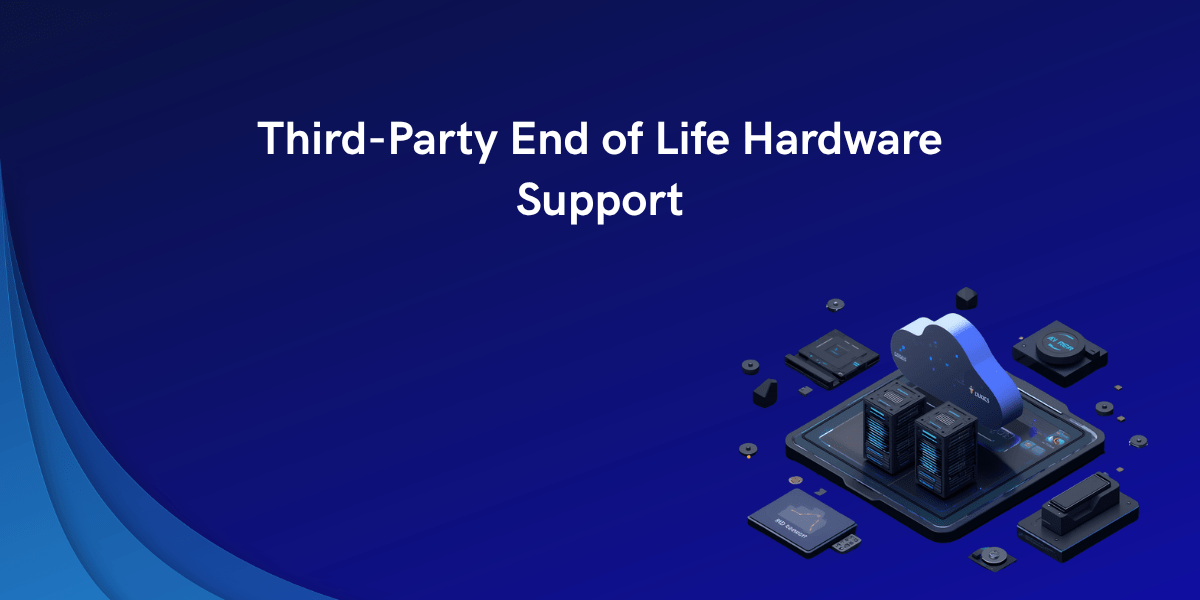
Many businesses continue using IT equipment for years because it still works well and supports daily operations. However, there comes a time when manufacturers stop providing updates, repairs, spare parts, and technical assistance for that equipment. This stage is known as End of Life (EOL).
When hardware reaches End of Life, many organizations worry about system failures, expensive upgrades, and limited support options. Replacing all equipment immediately is often costly and may not fit the budget. This is where Third-Party End of Life Hardware Support becomes a practical choice.
Third-party support allows businesses to continue using their existing servers, storage systems, network devices, and tape libraries without depending on the original manufacturer. It helps reduce maintenance costs, extend hardware life, and keep IT systems running smoothly.
What Does End of Life Mean?
End of Life refers to the stage when a manufacturer stops providing official support for a hardware product. This may include:
- Technical support
- Replacement parts
- Hardware repairs
- Warranty services
Even though the manufacturer no longer supports the equipment, the hardware may still be fully functional and suitable for business operations.
Many organizations continue using their equipment after End of Life because replacing it may not be necessary at that time.
Why Businesses Continue Using End of Life Hardware
There are several reasons why businesses keep using End of Life equipment.
Cost Savings
Replacing servers, storage systems, and network equipment can require a large investment. Many organizations prefer to extend the life of their current hardware instead of purchasing new equipment.
Stable Performance
Some older systems continue to perform well and meet business requirements. If the equipment is reliable, there may be no reason to replace it immediately.
Budget Planning
Businesses often plan hardware upgrades over several years. Third-party support helps them continue operations while preparing for future upgrades.
Reduced Waste
Keeping working equipment in service for a longer period helps reduce unnecessary electronic waste.
What Is Third-Party End of Life Hardware Support?
Third-party support is a maintenance service provided by an independent IT service provider rather than the original manufacturer.
These services are designed to support hardware that has reached End of Life status.
The support may include:
- Hardware maintenance
- Spare parts replacement
- System monitoring
- Technical assistance
- Preventive maintenance
- On-site support
- Hardware troubleshooting
This approach allows businesses to maintain their IT infrastructure without relying on manufacturer support.
Hardware Covered Under End of Life Support
Third-party support can cover a wide range of IT equipment.
Servers
Servers are responsible for storing data, running applications, and supporting business operations.
End of Life server support may include:
- Hardware diagnostics
- Component replacement
- Performance checks
- System maintenance
Organizations can continue using their servers while avoiding the high cost of immediate replacement.
Storage Systems
Storage systems hold important business data and applications.
Support services may cover:
- SAN storage systems
- NAS storage systems
- Disk arrays
- Storage controllers
Proper maintenance helps keep data accessible and reduces the risk of hardware failures.
Network Equipment
Network devices are essential for communication between systems and users.
Third-party support may include:
- Switches
- Routers
- Firewalls
- Network appliances
Regular maintenance helps maintain stable network performance.
Tape Libraries
Many organizations still use tape libraries for backup and long-term data retention.
Support services may include:
- Drive replacement
- Hardware repairs
- Preventive maintenance
- Spare parts management
This allows businesses to continue using their backup systems even after the manufacturer’s support period ends.
Benefits of Third-Party End of Life Hardware Support
Lower Maintenance Costs
One of the biggest advantages is cost reduction.
Manufacturer support contracts can become expensive, especially for older equipment. Third-party support often provides a more affordable option while maintaining service quality.
Extended Hardware Life
Many systems remain operational long after reaching End of Life.
Professional maintenance and replacement parts help businesses keep their equipment running for additional years.
Flexible Support Options
Organizations can choose support plans based on their requirements.
This flexibility allows businesses to focus resources where support is needed most.
Access to Spare Parts
Finding replacement parts can be difficult after equipment reaches End of Life.
Third-party providers often maintain inventories of compatible parts, helping reduce downtime when repairs are required.
Reduced Downtime
Fast response times and experienced technicians help identify and resolve hardware issues quickly.
This helps maintain business continuity and reduces interruptions.
Better Return on Investment
Businesses can gain more value from their existing hardware by extending its operational life rather than replacing it before necessary.
Challenges of Managing End of Life Hardware Without Support
Many businesses assume that EOSL Hardware must be replaced as soon as vendor
Operating End of Life hardware without proper support can create several risks.
Difficulty Finding Parts
When manufacturers stop supporting equipment, replacement components may become harder to obtain.
Longer Repair Times
Without expert assistance, hardware problems may take longer to diagnose and fix.
Increased Downtime
Unexpected failures can affect productivity and business operations.
Budget Pressure
Emergency replacements often cost more than planned upgrades. Having a support partner helps businesses manage these challenges more effectively.
How to Choose the Right End of Life Support Provider
Technical Experience
The provider should have experience supporting servers, storage systems, network devices, and tape libraries.Spare Parts Availability
Access to replacement components is important for fast repairs.Service Level Agreements
Clear response times and support commitments help businesses understand what to expect.Global Support Coverage
Organizations with multiple locations may benefit from support across different regions.Customer Support
Responsive technical assistance can help resolve issues more efficiently.Conclusion
End of Life hardware does not automatically mean equipment must be replaced. Many servers, storage systems, network devices, and tape libraries continue to perform effectively long after manufacturer support ends.
Agrius IT Provides End of Life Support Services
Agrius IT provides reliable End of Life support services for servers, storage systems, network equipment, and tape libraries. The support team helps businesses extend hardware life, reduce maintenance costs, and keep critical IT systems operating efficiently after manufacturer support has ended.
Whether an organization needs spare parts, hardware maintenance, technical assistance, or long-term support for legacy equipment, Agrius IT offers cost-effective solutions tailored to business requirements.
Want to learn more about End of Life support and maintenance services? Read more from Agrius IT’s resource center or contact the team to discuss your IT infrastructure support needs.